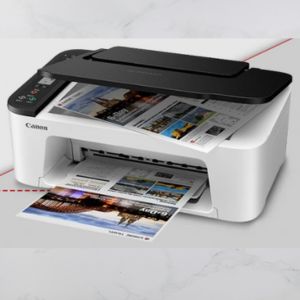
A Canon printer not connecting to WiFi may be using an old password, searching for an incompatible wireless band, or trying to join a network with unsuitable security settings. Weak reception and an incomplete setup process can also prevent the connection.
Start by checking whether the printer has joined your router’s network. If it has not, check the network name, password, wireless compatibility, and setup method. If it is already connected but your computer cannot find it, investigate device discovery and printer settings instead.
This distinction prevents unnecessary driver installations and repeated resets. Follow the checks below in order, testing the connection after each change.
Why Is My Canon Printer Not Connecting to WiFi?
A Canon printer won’t connect to WiFi when it cannot detect, authenticate with, or obtain a usable connection from the wireless router.
Common causes include:
A WiFi password entered incorrectly.
Saved credentials for a previous router.
A wireless band unavailable on the printer.
An incompatible router security mode.
Weak signal or interference.
Wireless networking disabled on the printer.
An expired wireless setup session.
Router restrictions preventing new devices from joining.
A separate problem occurs when the printer successfully joins WiFi but Windows, macOS, or a mobile app cannot discover it. In that situation, the printer’s wireless connection may already be working.
1. Check Your WiFi Network and Router
First confirm that your home network is operating normally. Connect a phone or laptop to the intended network and check its connection.
However, internet access alone does not prove that local devices can communicate. A guest network may allow browsing while separating the printer from your computer.
Check the network name carefully. Routers can broadcast several networks with similar names, including a guest network or an extender network.
If your Canon printer won’t connect to your home network:
Confirm that the router is broadcasting WiFi.
Identify the exact network name.
Check whether the printer has wireless networking enabled.
Look for router settings that restrict newly connected devices.
Avoid using a guest network that isolates devices.
You do not need to change advanced router settings before completing these basic checks.
2. Restart Your Canon Printer and Wireless Router
A normal restart can clear a temporary Canon printer WiFi connection problem without erasing saved settings.
Turn the printer off using its power button and wait until shutdown finishes. Turn it back on and allow startup to complete.
If the network is also behaving unexpectedly, restart the router. Wait until its wireless network is available before retrying printer setup.
Restarting the router temporarily disconnects other devices, so choose an appropriate time.
Retry the connection once the printer and router are ready. Avoid repeatedly restarting them while a setup process is still running.
3. Check the WiFi Password
If your Canon printer won’t accept the WiFi password, confirm that you are entering the password for the selected network.
WiFi passwords are case-sensitive. Check for:
Uppercase and lowercase letters.
Similar-looking characters, such as zero and the letter O.
Missing symbols.
Accidental spaces.
An outdated password saved in another device.
The router administration password and the wireless network password are not necessarily the same.
A printer’s Wireless Direct password is also different from your home WiFi password.
If the Canon printer won’t connect to a new WiFi password, run wireless setup again and enter the updated credentials. Changing the password on your phone does not update the printer automatically.
4. Check 2.4 GHz and Wireless Security Compatibility
Many Canon wireless printers use 2.4 GHz WiFi. Some models can also connect through 5 GHz.
If your Canon printer cannot detect the WiFi network, check the wireless specifications of the exact model. A 2.4 GHz-only printer cannot join a network broadcasting exclusively on 5 GHz.
On a dual-band router, confirm that the compatible band is enabled.
Your computer and printer do not always need to use the same wireless band. They need a network configuration that allows communication between them. A laptop on 5 GHz can often print to a printer on 2.4 GHz through the same router.
What if the printer will not connect to 2.4 GHz WiFi?
Check more than the frequency:
Confirm the password.
Check signal strength.
Verify the router’s security configuration.
Check for device-access restrictions.
Restart the setup process using the correct method.
For a Canon printer WPA2 connection, both devices must allow a compatible WPA2 configuration. Older models may be unable to join WPA3-only networks.
Use a secure mode compatible with your model. Do not remove network encryption or switch to an open network to complete setup.
5. Check Canon Printer Wireless Network Settings
If Canon printer wireless setup is not working, confirm that you selected the correct connection method.
Manual connection
On models with a suitable display, open the network settings and look for an option such as Manual connect, WiFi setup, or Wireless LAN setup.
Select the network and enter its password.
Easy Wireless Connect
Compatible models can receive network settings through a phone app or computer setup process.
Activate Easy Wireless Connect using the procedure for your model, then continue in the app or setup software.
This method is different from choosing the network directly on the printer’s screen.
WPS connection
WPS requires compatible features on both the printer and router. Start the printer’s WPS process, then activate the router’s WPS function within the displayed time.
If WPS fails, try manual connection or Easy Wireless Connect instead.
Do not assume that holding the WiFi button for the same number of seconds works on every Canon model. Button combinations and indicator patterns vary.
6. Fix Canon Printer Not Connecting to WiFi After Router Change
A replacement router can introduce a different network name, password, wireless band, or security configuration.
The printer may continue searching for the previous network even though your computer has already connected to the new router.
To reconnect:
Connect your phone or computer to the intended home network.
Open the printer’s wireless setup options.
Start a new manual connection or Easy Wireless Connect session.
Select the new network name.
Enter its password.
Wait for confirmation.
Check the printer’s network status.
If the router uses the same network name and password as before, the printer may reconnect automatically, provided the other settings remain compatible.
After the printer joins the network, a computer may still use an outdated printer entry. Re-add the printer if that entry no longer reaches it.
7. What to Do When Canon Printer WiFi Setup Failed
A Canon printer wireless connection failed message does not always mean the password is wrong.
Read the exact message and note the stage where setup stopped.
The app cannot discover the printer
Confirm that the printer is in the required setup mode. If the setup session expired, activate it again before restarting discovery.
Allow the app’s required local network or nearby-device permissions. Depending on the phone, setup may request additional permissions for discovery.
The printer cannot find the network
Check the wireless band, signal, and network name. If the network name is hidden, compatible models may allow manual SSID entry.
The printer finds the network but cannot join
Recheck the password and router security compatibility. Inspect any device filtering or access controls on the router.
The printer connects, but setup cannot finish on the computer
Check whether the computer is using a guest network or a VPN that changes local network access.
Review relevant application permissions rather than broadly disabling the firewall or antivirus.
8. Update or Reinstall Drivers When the Printer Is Already Connected
Printer drivers affect communication between the computer and printer. They generally do not determine whether a printer can join WiFi through its own control panel.
If the printer cannot detect your network, changing the Windows driver is unlikely to resolve that specific problem.
Consider updating or reinstalling compatible printer software when:
The printer has joined WiFi but the computer cannot use it.
Printing stopped after an operating-system change.
The installed software belongs to another model.
The computer repeatedly reports a driver error.
Use a verified software source and select the package for your exact model and operating system.
Firmware is separate from the computer’s printer driver. Consider an applicable firmware update when its release information addresses your issue. Follow the model’s update procedure and avoid interrupting power during installation.
9. Fix Canon Printer WiFi Connection on Windows 11
If your Canon printer won’t connect to WiFi on Windows 11, first check its network status independently of Windows.
Once the printer has joined the router:
Open Settings.
Select Bluetooth & devices.
Open Printers & scanners.
Choose Add device.
Select your Canon printer.
Complete installation and print a test page.
If Windows cannot find it, verify that the computer and printer can communicate on the same local network.
An older USB installation may appear separately from the wireless printer. Select the appropriate entry when printing.
Windows 10
For Canon printer wireless setup on Windows 10, open Settings → Devices → Printers & scanners, then select Add a printer or scanner.
If the printer is already connected to WiFi but discovery fails, investigate the computer’s network configuration and printer software rather than resetting the router immediately.
10. Fix Canon Printer Not Connecting to WiFi on Mac
A Canon printer not detected on Mac may already be connected to the router.
Check the printer’s network status first. Then open System Settings → Printers & Scanners and choose the add-printer option.
Select the correct printer and use AirPrint when the model is compatible, or appropriate installed printer software.
If the Canon printer is connected to WiFi but the Mac cannot find it:
Confirm that both devices use the intended local network.
Avoid an isolated guest connection.
Check whether a VPN changes local device access.
Restart the affected devices.
Remove and re-add an outdated printer entry if necessary.
Resetting the entire Mac printing system removes saved printer configurations. Reserve it for persistent problems after simpler checks.
11. Fix a Canon Printer That Keeps Disconnecting From WiFi
If your Canon printer WiFi connection keeps dropping, identify when it happens.
Does it disconnect after the router restarts, after being moved, or only when one computer tries to print?
Move the printer closer to the router temporarily and test again. Improvement suggests that reception or interference may be involved.
Also check for:
Recent router setting changes.
An unstable extender connection.
Incompatible wireless settings.
Printer firmware issues addressed by an applicable update.
A printer appearing offline on one computer does not prove that it has lost WiFi. Check the printer’s connection status before changing network settings.
If the printer remains connected but a computer loses track of its address, a router DHCP reservation may improve address consistency. Make this change only when you understand the router’s settings.
12. Reset Canon Printer Network Settings When Necessary
A network reset can clear old wireless settings when repeated setup attempts fail.
Use the network-reset procedure for your exact model. Menu names and button sequences differ.
Before resetting, record the network name and make sure you know its password.
After the reset:
Activate the appropriate wireless setup method.
Connect to the intended network.
Confirm the connection.
Add or update the printer on your devices.
Print a test document.
A network-only reset is different from a full factory reset. Avoid erasing unrelated settings when only the wireless connection needs reconfiguration.
Frequently Asked Questions
Why is my Canon printer not connecting to WiFi?
Common reasons include incorrect credentials, incompatible wireless settings, weak signal, old router information, and an incomplete setup process. Check whether the printer detects the network before selecting a fix.
Why does my Canon printer say unable to connect to network?
The printer may have found the network but failed authentication or network configuration. Recheck the password, security mode, and router access restrictions.
Why can my phone see WiFi but my printer cannot?
Your phone may use wireless bands or security features unavailable on the printer. Compare the printer’s specifications with the router’s active settings.
Why is my Canon printer connected to WiFi but my computer cannot find it?
The computer may be on an isolated network, using an outdated printer entry, or unable to discover local devices. Check the printer’s network details and the computer’s connection.
Will reinstalling the driver reconnect the printer to WiFi?
Not necessarily. If the printer itself has not joined the router, complete wireless setup first. Reinstalling drivers addresses computer-side printing problems.
Should I factory-reset my printer after every connection failure?
No. Check the network, password, compatibility, and setup method first. Use a network-only reset when saved network settings need to be cleared.
Can I reconnect without WPS?
Yes. Compatible models offer manual connection or Easy Wireless Connect. WPS is one connection option, not a requirement.
Confirm the Connection Before Printing Again
Check that the printer shows the correct network name and a connected status. Then print one small document from your computer or phone.
If wireless setup succeeds but printing fails, continue with the selected printer, queue, and device settings. Separating network connection problems from printing problems makes troubleshooting more accurate and avoids repeating steps that are already complete.